Change Language :
Torsion cables for multi-axis robots & dress packs
±180°/m
torsion on many robot cable types
±360°/m
on selected CFROBOT8.PLUS cables
Up to 4 years
service-life guarantee, subject to conditions
2,100+
chainflex® cables across the range
Why choose chainflex® torsion cable?
For moving applications, the commercial decision involves more than purchase price. Cable construction, expected service life, and replacement requirements can all affect operating cost.
Application-specific design
Select the electrical function and mechanical construction required for the robot movement.
Service-life planning
Use application-specific calculations rather than relying only on static cable specifications.
Unharnessed torsion cables
chainflex® torsion cables are designed to withstand constant twisting and complex three-dimensional movement.
Harnessed torsion cables
Pre-assembled, tested and ready to install, reducing downtime and simplifying sourcing through a single supplier.
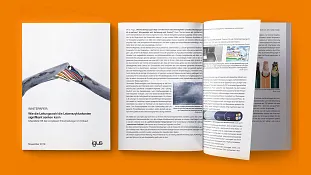
Are your cables performing to their full lifecycle potential?
Learn how continuous flexing, torsion, and mechanical stress affect cable longevity, and how to optimise performance in demanding applications.
Browse chainflex® robot torsion cable types


Torsion cable for the seventh axis

Tested for demanding robotic applications
igus® tests chainflex® cables in its laboratory and uses application parameters such as movement, bend radius, temperature, torsion and media exposure when assessing service life.
Automotive robotics
Welding, clinching, screwing and gluing can place demanding torsional and abrasion loads on cables.
Cleanroom & ESD
Selected cable and triflex® solutions are available for controlled production environments.
7th-axis robots
CFSPECIAL.792 solutions address robot-specific drive and measuring-system requirements on linear axes.
Harsh environments
Depending on type, options include oil resistance, UV stability, flame retardancy and halogen-free materials.
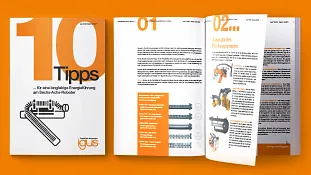
10 tips for reliable energy supply on 6-axis robots
Designing a robot dress pack doesn't have to be complex. This technical white paper walks you through 10 essential steps for configuring energy supply systems on robot axes 3-6, helping you improve cable protection, minimise downtime, and achieve longer-lasting, more reliable robotic operation.
Applications with robot cable management


Frequently asked questions regarding robot cables
Our robot cables are specifically designed for 3D torsional motion with up to ±360° rotation per metre, making them ideal for multi-axis robots and automated machinery.
chainflex® continuous flex cables meet global standards including UL, CE, EAC, NFPA 79, and cleanroom ISO Class 1. They also support major communication protocols such as PROFINET and PROFIBUS.
By using specialised designs for continuous flexing, chainflex® cables minimise insulation cracks, conductor breaks, and EMI issues. This means fewer cable failures, less machine downtime, and higher production efficiency.
igus® offer free online tools including a service life calculator and cable configurator. These help you select the right torsion cable and predict its performance in your specific application.
Yes. Engineers and purchasing managers can request a free cable sample box to evaluate product performance before committing to larger orders.
Yes. With our readycable® service, cables can be ordered pre-harnessed with connectors from brands like Siemens, Beckhoff, Allen Bradley, and SEW, ready for plug-and-play installation.
Standard cables often fail under constant motion, leading to downtime and costly replacements. chainflex® cables are designed with special materials and optimised stranding to withstand up to 2 billion test cycles, ensuring long service life and reliable signal transmission.
A robot dresspack is a system designed to organise and protect cables, hoses, and other components that supply power, data, and media to a robot's end effector. Installing the correct dress pack design is crucial to prevent cable damage, reduce downtime, and ensure the robot's full range of motion without interference.
Robotic cables operate under far greater mechanical stress than cables used in linear applications due to the complex, multi-axis movements of industrial robots. These continuous movements subject the cables to extreme torsional forces, bending, and twisting during operation.
To ensure long service life and reliability, robot cables must withstand constant torsional movements and high dynamic loads without failure. High-quality robot cables are essential because a cable failure can bring an entire production line to a halt, resulting in costly downtime.
Unlike cables in linear energy chain applications, where movement typically occurs in one direction, robotic cables must be designed for multi-axis motion and require exceptional flexibility. This means both the cables and the cable protection systems must be capable of handling complex movements while maintaining consistent performance.
For example, chainflex® CFROBOT robot cables are tested to withstand demanding torsional movements and achieve a service life of over 5 million cycles at ±180°/m, ensuring reliable operation in robotic applications.
There are several methods available to protect robotic cables, but not all provide the same level of performance and reliability. While corrugated hoses are a low-cost option, they offer limited durability and can lead to cable failures over time.
For applications where reliability and maximum robot uptime are critical, many manufacturers choose triflex® energy chains. These cable protection systems have been specifically developed for robotic applications and are designed to handle the complex, multi-axis movements of industrial robots.
Unlike protective hoses, triflex® energy chains provide a defined bend radius, helping to minimise stress on cables and hoses during operation. They also offer high flexibility, integrated radius stop-dogs, and excellent tensile force absorption. By maintaining controlled cable movement, they can significantly extend cable service life, reduce the risk of failure, and help ensure continuous, productive robot operation.
Contact us
Contact details

Seán Ryan086 0329555Submit form
Opening hours
Office hours
Monday to Friday from 8 am - 8 pm.
Live chat:
24h