Change Language :
Custom plastic injection moulding
Injection moulded parts direct from the manufacturer
Producing parts is what we do. From prototypes to high-volume production, we manufacture commodity catalogue parts, as well as custom injection moulding to customer specification and design.
Injection moulding is a widely used manufacturing process for producing high volumes of precision plastic components. But what is injection moulding? The injection moulding process involves injecting molten plastic into a custom-designed mould, where it cools and solidifies into the final shape.
Injection moulding is ideal for creating durable, consistent, and cost-effective parts across industries such as automotive, electronics, aerospace, medical, and consumer goods. At igus, we have over 800 injection moulding machines, split between the head office in Germany where the UK source bespoke parts, the USA and China. We produce 245,000 different products in over 1 million variations of components.
We have a dedicated team that can help support with the design of your injection moulded parts and material choices as well as manufacturing options. For more details click here.
How to order your custom plastic injection moulded part
Step 1- Upload your CAD file
Step 2- Compare the materials and manufacturing methods which best suit your application
Step 3- Review the price and delivery time or request a quote.
Step 4- If you need support, technical advice, or help with the design you can reach out via phone call, live chat, teams, email or come and visit us. See contact details here.
Step 5- If you are happy with everything, place the order.
Injection moulding vs other manufacturing methods
| Requirement | Injection moulding | 3D printing | CNC machining |
|---|---|---|---|
| Large quantities | ✅ | 🟠 | 🟠 |
| Low unit cost at batch production | ✅ | ❌ | ❌ |
| Capable of complicated geometry's | ✅ | ✅ | ✅ |
| Tooling required | ✅ | ❌ | ❌ |
| Quick delivery | ❌ | ✅ | ✅ |
| Low quantities | ❌ | ✅ | ✅ |
| Prototypes | ❌ | ✅ | ✅ |
What type of parts can be injection moulded?
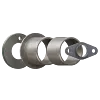
Bearings and bushings

Gears
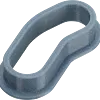
Bespoke parts
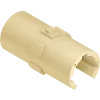
Liners
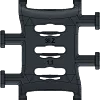
Energy chain components
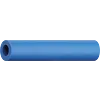
Rollers
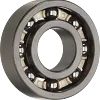
Ball bearings
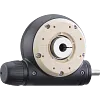
Gearboxes
Injection moulding process step by step
Learn about the various processes step by step that the injection moulded components undertake to become commodity igus parts.


Injection moulding materials
With over 50 core materials, as well as many development materials, our injection moulded machines are busy 24 hours a day! We have materials for:
- High temperature,
- Chemical resistance
- FDA
- High wear resistant
- Low friction
- High loads
and many more...
Frequently asked questions
Plastic injection moulding is a manufacturing process used to produce large volumes of plastic parts by injecting molten granule material into a mould. It’s ideal for creating complex, durable components with high precision and repeatability, commonly used in industries like automotive, electronics, and consumer goods.
Injection moulding can be expensive upfront due to the cost of designing and manufacturing custom moulds, especially for complex parts. However, it's highly cost-effective for large production runs, as the per-unit cost drops significantly with volume, making it ideal for mass manufacturing.
There are a variety of materials, some of the typically conventional ones are Polypropylene, ABS, Nylon, POM. We have over 50 igus materials which are a blend of filaments, including self lubrication elements.
Injection moulding is used because it allows manufacturers to produce large quantities of complex, high-precision plastic parts quickly and cost-effectively. It offers consistent quality, minimal waste, and is ideal for mass production across industries like automotive, electronics, and consumer goods.
Key advantages of injection moulding in manufacturing:
- High Efficiency – Ideal for mass production with fast cycle times.
- Consistent Quality – Produces identical parts with tight tolerances.
- Low Waste – Excess material can often be recycled and reused.
- Design Flexibility – Supports complex shapes and detailed features.
- Cost-Effective at Scale – Lower per-unit cost for large volumes.
- Material Variety – Compatible with a wide range of plastics and additives.
- Durability – Produces strong, long-lasting components.
Injection moulding can be sustainable when managed responsibly. Many manufacturers use recyclable plastics, energy-efficient machinery, and optimise production to reduce waste—making it a viable option for eco-conscious, high-volume manufacturing.
This varies but the tooling cost on average can be from £2000 to £8000 depending on the number of cavities, the complexity of the parts, the size of the part, tolerances and materials, as well as other factors.
Injection moulding is a more expensive manufacturing method initially as there is the tooling costs which can be a couple of thousand pounds however, after the tooling cost, the individual piece prices are low in comparison to other manufacturing methods.
The number of parts depends on the number of cavities. Normally, a tool would get hundreds of thousands, if not millions of parts from each tool.
Normally the tooling lead times are between 8-12 weeks, depending on the complexity, material and number of cavities.
We wouldn't normally recommend injection moulding prototypes as the cost of the tooling is too high. Normally we would suggest 3D printing or CNC machining.
Other manufacturing capabilities


Contact us
Contact details

Seán Ryan086 0329555Submit form
Opening hours
Office hours
Monday to Friday from 8 am - 8 pm.
Live chat:
24h