Change Language :
Flexible cables - for special requirements
With chainflex, igus offers a very wide range of flexible cables for different applications and surrounding conditions. According to the requirements, you can choose between different abrasion-resistant jacket materials. Depending on the ambient temperature, contact with oils or chemicals, the jacket materials PVC, PUR and TPE are available.
The guaranteed service life under the respective conditions is determined in the 5,500m² company test laboratory and checked in the course of continuous experiments. chainflex cables undergo very elaborate tests at different speeds, among other things in the climatic containers specially set up for this reason. Here, cable tests are carried out in continuous movement at -40°C, for example. Thanks to testing for nearly 400 million strokes, igus cables can therefore be classified according to one of three criteria: "fixed installation according to DIN", "moving application according to DIN" and "according to igus test series under real conditions".




Oil-resistant cables
The effects of oil and therefore the oil resistance of a cable depend on a number of factors that must be taken into account when choosing the right material. These include the composition of the oil, e.g. diesel oil or hydraulic oil, the temperature and operating time, and the pressure or vacuum exerted on the cable. In principle, oils of all kinds can attack plastic in continuous use and impair its specification. Oil resistance is therefore divided into 4 subgroups:
No oil resistanceHerethe outer jacket of the cable is damaged or destroyed within a short time. This specification is suitable for use in oil-free environments such as woodworking machines or high-bay warehouses.
oil-resistant according to DIN EN 60811-2-1 and DIN EN 50363-4-1 Ashort-term exposure to oils such as hydraulic oil is permissible without damaging the outer jacket, e.g. when used in an injection moulding machine.
**oil-resistant according to DIN EN 60811-2-1 and DIN EN 50363-10-2In this case,**no or at least only a slight influence from synthetic oils is to be expected. The cables can be used, for example, in machine tools in which no bio-oils are used.
oil-resistant in accordance with DIN EN 60811-2-1 and resistant to bio-oil in accordance with VDMA 24568 with Plantocut 8 S-MB from DEAIn additionto being resistant to synthetic oils, these cables are also resistant to bio-oil. This makes them an ideal cable for machine tools, for example, in which bio-oils are used.
Tested quality for oil-resistant cables from the igus® test laboratory
All resistance data is verified in the 2,750 m2 test laboratory and tested under the most adverse conditions. Two billion test cycles are carried out annually for highly flexible cables. Continuous long-term testing enables igus® to reduce costs and at the same time guarantee process reliability for customers.
The data collected in the test laboratory is used by the igus® tools as a basis for service life calculations and configuration options. For example, you can use the tools to calculate the service life of oil-resistant cables. In addition, igus® offers freely configurable cables for a wide range of requirements. From UV-resistant cables, flame-retardant cables and many more to customised special solutions, even with an extremely small bend radius.
Many cable types for special applications on bearing Shielded to suit the application and designed for long-lasting use, many chainflex® cables are available in halogen-free material as well as in PUR or PVC for different temperature ranges and even difficult conditions such as chemical resistance, UV radiation or working in cleanrooms.
What are halogen-free cables?
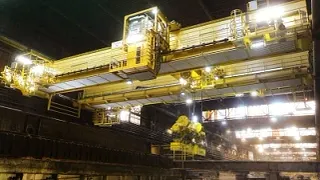
One speaks of halogen-free cables if no materials with elements from the halogen group have been processed in cables. Halogens, e.g. chlorine, are excellent insulators as non-conductors and are therefore often used as jacket material for cables. The most common example of this is polyvinyl chloride (PVC). But the use of halogens also carries risks.
When a plastic containing halogens burns, these halogens are released from the jacket and get into the breathing air. The combination with water produces an acid that is toxic to humans. Halogen-free is therefore particularly important if the user has to pay particular attention to the danger posed by a potential fire.
Great attention should be paid to the use of halogen-free cables, especially in applications with increased fire hazard. So if a cable is used where there is an increased risk of fire, the absence of halogen excludes a risky source of hazard. For this reason, specifications clearly stipulate that only cables that are halogen-free are used in such applications.
Advantages of halogen-free cables
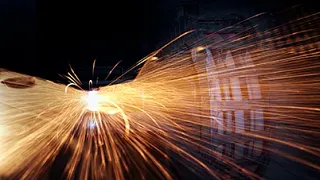
Halogen-free cables are free of elements such as bromine, fluorine, iodine or chlorine, which are all very reactive. Compared to conventional PVC-insulated cables, there are some advantages in case of fire. In the case of halogen-free cables no toxic or corrosive gases are released in a fire, which could be a threat to humans or buildings. In contrast to PVC cables, a dangerous elimination of halogen-containing combustion gases can be ruled out. Halogen-free cables can be used at higher temperatures than PVC cables.
In addition to halogen-containing PVC cables, igus also uses halogen-free cables with jacket materials made of PUR (polyurethane elastomers) and TPE (thermoplastic elastomers). These are manufactured in accordance with DIN EN 60754 and thus meet the halogen-free requirements.
Contact us
Contact details

Seán Ryan086 0329555Submit form
Opening hours
Office hours
Monday to Friday from 8 am - 8 pm.
Live chat:
24h