Change Language :
Linear technology wiki
In the jungle of technical terms for linear guide technology, it is easy to lose track. We have therefore summarised all the important technical topics relating to our linear technology for you here. From the specifications of our materials to practical and research-based expertise. We also explain, for example, what the stick-slip effect or a linear system is.
What you will find on this page
What are roller bearings?
Roller bearings or roller guides are parts used when the movement must take place with the lowest possible running resistance, as roller bearings have a low frictional resistance. They are also known as roller bearings.
At igus®, roller bearings are combined with plain bearings, therefore utilising their advantages together. There are different types of roller bearings, such as axial roller bearings or tapered roller bearings.
Roller guides have a low frictional resistance and can consist of several roller bearings.
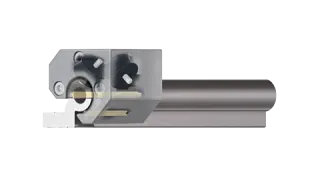
What is a pillow block?
The pillow block bearing is an element in machine and device construction. A bearing is used to guide two components that move against each other. In a housing bearing, the bearing is located in a housing.
These housings are available in different types. For example, there are fixed, self-contained, separable and open pillow block housing bearings.
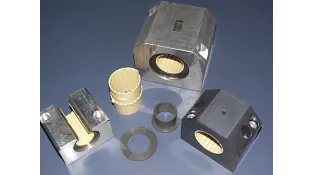
Information on telescopic rails
A telescopic rail is a linear guide consisting of several rails. The rails can be moved inside each other and can be pulled apart telescopically. A well-known area of application for telescopic rails is (cabinet) drawers. However, telescopic slides are also used in machines, e.g. for adjusting a safety door in a machine tool. Telescopic slides are available as full-extension, over-extension and partial-extension slides.
At igus®, the telescopic slides are made of a solid plastic/aluminium design, which is characterised by its low weight and low price. The telescopic slides are corrosion-free and available in infinitely variable lengths up to 1200 mm (total extended length).
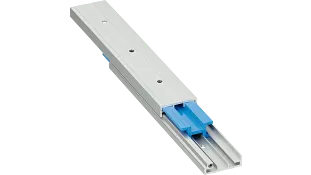
What are ball bushings?
Ball bushings are one of many types of linear bearings that are designed to provide support to linear motion shafts in mechanical machinery. Traditional ball bushings consist of a smooth tubular bearing with ball bearings located throughout the inside wall that allows for continous motion of the shaft with less friction. Plastic linear bearings guide the shaft in exactly the same way but do not require any lubrication and maintenance. They do not wear and have very low coefficients of friction.
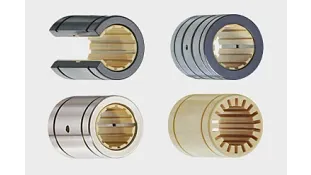
Positioning systems
A positioning system puts tools or workpieces into the required position for processing. Depending on the application, different factors are important, such as speed, accuracy or flexibility. Positioning systems therefore normally use linear systems to move in one direction to the respective position, or XY tables that map two movement axes and thus find their position. In many cases, something is brought into a certain position for processing, fixed if necessary and then the work step is carried out.
Depending on the application, different solutions from igus® are installed within the positioning systems. In particular, linear guides or XY tables are required as well as energy chains to guide cables. igus® offers these products in a wide range of different versions, so that it is very likely that an igus® solution is also installed in a positioning system. Maintenance-free and yet cost-effective solutions made from high-performance plastics provide significant advantages, particularly in positioning systems with difficult conditions.
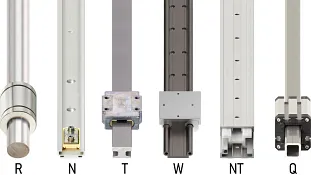
Technical data for drylin W
Technical data is vital when trying to specify the best product to use in your application.
The technical data for drylin W page has dimensions, loads and additional information to help at the design stage of applications and projects.
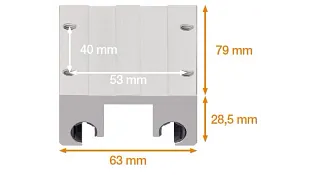
Technical data for drylin R
This page will help identify the best sliding material to go with the best shaft material.
It also explains a few of the unique selling points of drylin R and why customers chose to use it, as well as static load capacity, mechanical properties and general properties of the range
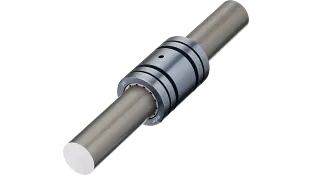
Technical data on drylin T
drylin T is commonly used as an alternative to ball bearing systems.
On this technical data page you will be given further unique selling points of drylin T, as well as load capacity, suggested sliding materials and general technical information regarding the drylin T range.
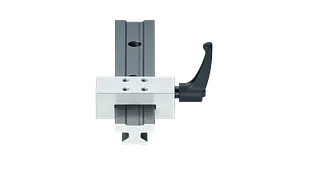
Technical data on drylin N
drylin N is our low profile guides which are perfect for small installation spaces.
We have various sizes which can be found in the shop and this page helps you identify the right size for your application, as well as providing general properties such as weight of rail, carriage, heights etc.
drylin W "turn-to-fit" video
Having the ability to adjust the clearance on a bearing saves a lot of time and effort.
This video shows how easy it is to adjust the clearance on the WJUME drylin W pillow block.
Using just an allen key, the customer is able to adjust the clearance to suit their application.
Your linear technology white paper
In our linear guide white papers, our experts share their practical experience and many years of research and development results. The white papers cover various topics in the field of linear bearing technology.


Frequently asked questions:
drylin® is a product range of lubrication-free linear plain bearings based on the principle of sliding instead of rolling. Tribologically optimised iglidur high-performance polymers are used as sliding surfaces. The drylin linear systems work in dry operation and are maintenance-free. Linear guides are available on rails or round shafts. In addition to the freedom from maintenance and lubrication, robustness and insensitivity to influences such as dirt, water, chemicals, heat or impacts are priorities.
A linear system is a complex design that allows machine parts to move along a route in space. These movements, known as translations, form the basis for a wide variety of machines and systems. Linear systems from various manufacturers are equipped with recirculating ball guides or track roller guides, which permit precise movement with low friction.
The linear rail systems offered by igus achieve similarly good values in terms of precision and friction and are characterised by their freedom from maintenance and lubrication, smooth operation and ease of assembly.
The stick-slip effect refers to the jerking movement of solid bodies moving against each other. This phenomenon occurs when the static friction of a moving body is significantly greater than its sliding friction.
In a hybrid linear bearing, plain bearings and roller bearings work together: integrated rollers achieve low drive forces while the sliding effect of the plain bearings protects against lateral forces. This combination results in the absorption of abusive forces:
1. Reduction of coefficient of friction
2. Reduction of the required drive force
3. System function without restricting the 2:1 rule
Linear motion technology refers to our drylin linear range of products. Our lubrication-free parts offer long service life, smooth running operation and clean applications.
Contact us
Contact details

Seán Ryan086 0329555Submit form
Opening hours
Office hours
Monday to Friday from 8 am - 8 pm.
Live chat:
24h